


Restoration Portfolio
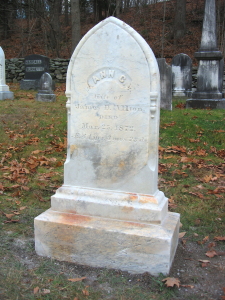
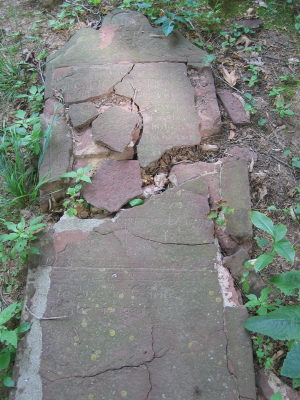
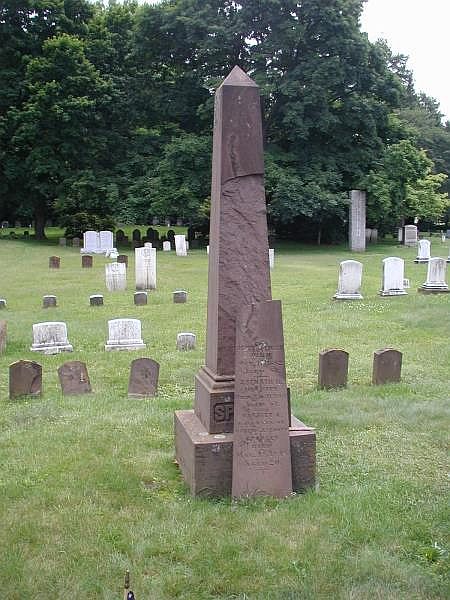
These are just a few of the pieces we have restored over recent years. Brownstone and marble are the most widely chosen stone varieties for restoration or conservation projects.
Conservation: the preservation and reconstitution of ancient stones that focus on longevity and original dimension only. Rather than exact reproduction of details like color, texture, lettering and decorative & architecture, the goal, like an Egyptian vase conservation, is not to create missing details that are hard to decipher from original surface. Instead, an intentional filling and rebuilding of original dimensions with an appropriate material that doesn’t necessarily blend but is obvious in it’s presence is the usual result.
Restoration: the act of returning something to its original state or condition, which can involve repairing, renewing or reconstructing it. Restoration is a more involved undertaking in that once the piece is conserved, it is then recarved, textured and color matched as much as possible to it’s original appearance. This process adds considerably to the cost of such a commission.
New England burying ground restoration enjoyed its first wave of interest in Hartford in the 1890s, sparked by the Daughters of the American Revolution. The group restored many ancient brownstone memorial tablets carved of Portland Brownstone from Portland, Connecticut which started quarrying in about 1700. Having lasted reasonably well for about 100 years, the memorials began to show signs of deterioration in the late 19th century.
Over the years, the porous brownstone had readily absorbed and held large quantities of water through extreme temperature changes, causing deterioration of the natural binders that kept the silica sand intact. With no fastener the sand fell apart, continuing to this day to be a cause of great loss of colonial sculptural art to the historic community.
The next distinct period of interest began when the technology of plastics and resins became available. Beginning in the 1950s and up into the 1970s, Beij, Williams & Zito undertook several restorations that are still in good shape today considering the incompatibility of the materials that were then used. As with the DAR in the 1890s, we did not consider the interaction of the foreign material with the substrate over the years. Now, because of extensive laboratory research, we know that resins, polymers and low pH cements can cause more damage than good over the years when used as a filler or binder of brownstone in restoration attempts.
To date, Beij, Williams & Zito, Inc., has completed many notable restorations including the Civil War Memorial and the Governor Pitkin Tabletomb at Center Cemetery, East Hartford; the Ancient Burying Ground at Gold Street, Hartford, including the reproduction of the Founders of Hartford Obelisk; as well as various other restoration projects in ancient burying grounds in East Granby, Farmington, Rocky Hill, East Hartland, Norfolk, Suffield, Wethersfield, Simsbury, Tarriffville, East Haddam, Hartford, Middletown, Glastonbury, Manchester and West Thompson among others.
Fine Art Sculpture, Memorials & Restorations in Stone & Bronze in Connecticut since 1870
Beij, Williams & Zito, Inc.
PO Box 270409
West Hartford, CT 06127
860-983-1036

 Beij, Williams & Zito, Incorporated